Type Ia supernovae (SNe Ia) are explosions of white dwarf (WD) stars in interacting binaries. A white dwarf is not going to undergo an explosion by itself. It needs a trigger. The trigger is provided by another companion which can be a wide range of objects including a white dwarf, a helium rich star or a red giant star. Hence, SN Ia should always occur in a binary system.
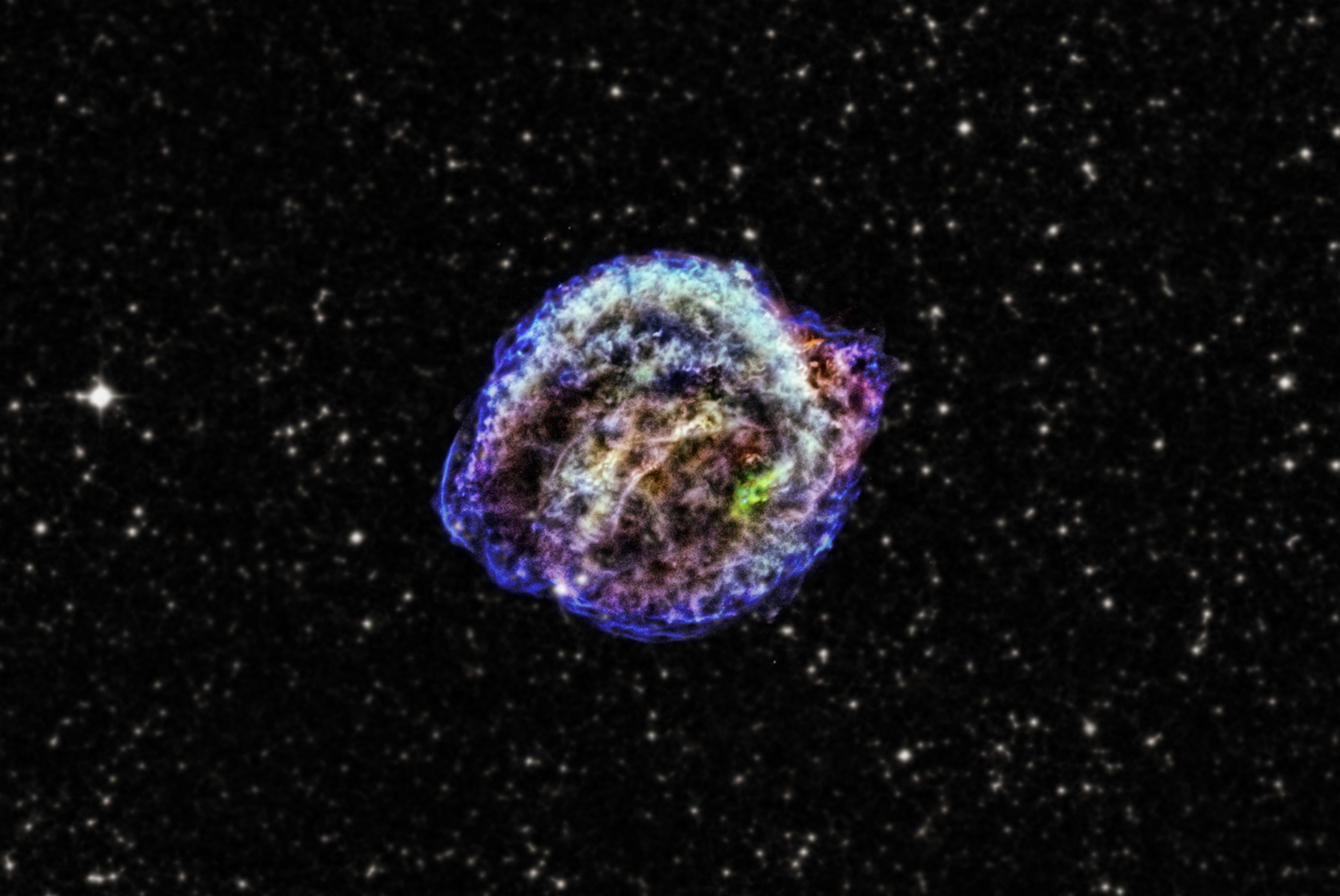
There are several explosion mechanism proposed that try to address the longstanding mystery involving the occurence of SN Ia in the universe. I discuss some of these brielfy here.
Single Degenerate (SD) Scenario
In this model, the White Dwarf (WD) is accompanied by a companion. Accretion starts when the two come close to each other due to orbital decay that can happen because of gravitational wave emmision or other losses. Mass transfer leads to the increase of mass of the WD. The maxmimum mass that a WD can sustain is determined by Chandrashekhar limit which is around (1.4 Solar mass for a canonical WD). Once it reaches this limit, the electron degeneracy pressure can no longer hold the WD primary against the immense gravitational pressure and it starts to collapse. This leads to a run away thermonuclear burning in the core igniting all of the nuclear fuel at once because of short nuclear burning timescales. It realeases a huge amount of energy. How much? Imagine an object, roughly the size of the earth and mass of the sun, completely blown away in just under a second or two. This is how powerful a SN Ia is. It can outshine an entire galaxy.
Double Degenerate (DD) Scenario
In this scenario two WDs orbiting each other lose angular momentum and energy through the radiation of gravitational waves, and a merger occurs. The exact time after merger when explosion occurs is unknown, and different mechanisms are discussed in the literature. In recent years, a violent merger process was proposed as a channel to ignite the WD. Others consider a very long delay from merger to explosion know as spin down mechanism, because rapid rotation keeps the structure stable even as the accreting primary exceeds the Chandrasekhar mass limit.
Core Degenerate (CD) Scenario
In this scenario a WD merges with a hot core of a massive asymptotic giant branch (AGB) star. The explosion can occur shortly after the common envelope (CE) phase, hence leading to a SN Ia inside a planetary nebula, or after a very long time delay. There is some overlap between the DD and CD scenarios, in the sense that if the merger occurs after the termination of the CE phase, but while the core is not yet on the cooling track of a WD, both scenarios describe the same system. Basically, this occurs when the merger occurs during the planetary nebula phase of the system.